On a winter morning in the Ger districts of Ulaanbaatar, Mongolia, a man named Bat-Erdene wakes before dawn to light the coal stove in his family’s home. Overnight, temperatures have dropped sharply and inside, the room becomes filled with smoke as cracks in the walls, reopened each year by shifting frozen ground, drain away whatever warmth the stove produces.
Like Bat-Erdene, more than half of Ulaanbaatar’s population — nearly one in four Mongolians — live in Ger districts, named after the round tents traditionally used by Mongolian nomads. These informal settlements struggle with inadequate basic services, severe air pollution, and structurally fragile housing. Residents exposed to these conditions miss more days of work, earn less, and age out of the labor force earlier — making the issue not only a housing problem, but a jobs problem.
That’s why the World Bank Group is working to improve housing in Mongolia’s cities and accelerate job creation at scale. Delivering on that agenda requires a three-pillar approach: investing in foundational infrastructure, supporting a business-friendly environment, and mobilizing private capital. This blog explains what each pillar looks like in practice, and why all three must move together to create more and better jobs in Mongolia.
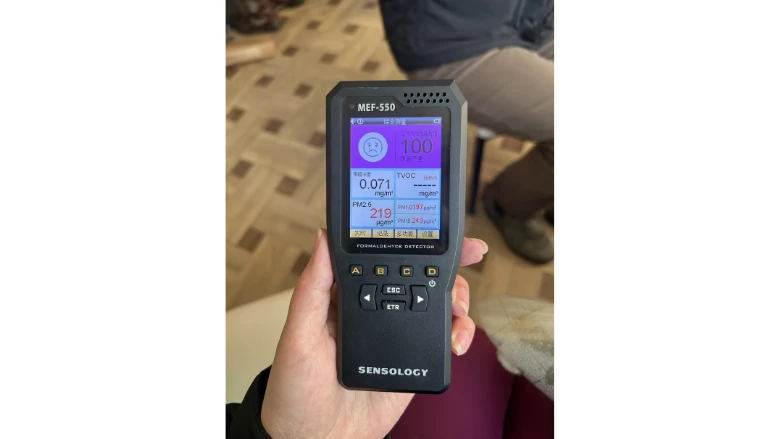 Wintertime indoor PM2.5 levels in sampled Ger district homes averaged 175–180 μg/m³—nearly 12 times higher than WHO guideline levels.
1. Upgrading Housing Infrastructure Creates Direct Jobs
Housing retrofits are a labor-intensive infrastructure investment. Upgrading homes depends on the labor of local masons, carpenters, insulation installers, electricians, and plumbers. Scaled across Ulaabaatar’s Ger districts, resilient housing construction represents a significant opportunity for direct job creation using local labor and locally sourced materials, while simultaneously improving the quality and safety of homes.
The economic returns are strong. Retrofitting detached houses can reduce heating demand by around 50 percent, lowering fuel use and emissions. When avoided healthcare costs and productivity losses are considered, benefits clearly exceed upfront costs. This is infrastructure investment doing double duty: improving living conditions and building workforce capacity to sustain growth.
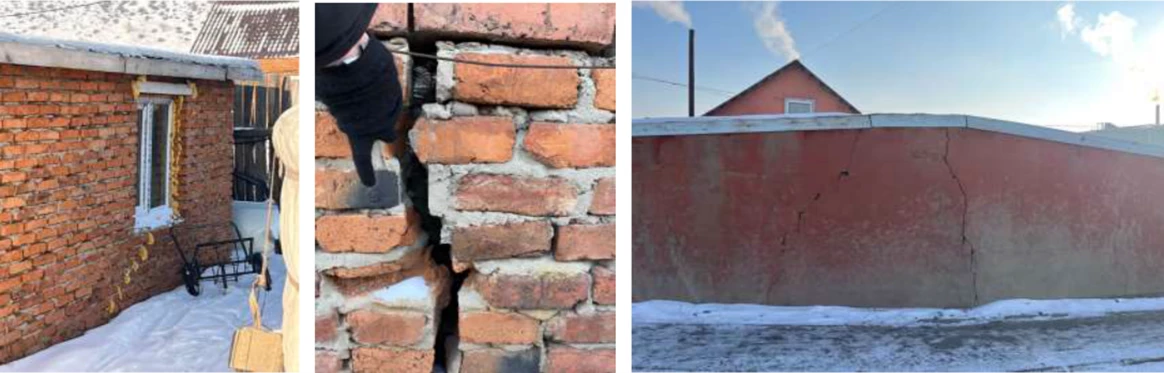 Structural damage linked to frost heave and weak foundations worsens heat loss and housing vulnerability.
2. Building a Business-Friendly Construction Sector
A skilled, certified, and well-regulated construction sector does not emerge on its own. Most homes in Ger districts are self-built, without engineering oversight or compliance with building standards, which means the sector generating Mongolia’s housing stock is also the sector most in need of upgrading.
Creating the right enabling environment with clear standards, training pathways, and quality assurance mechanisms that reward better work is what turns informal construction activity into a sustainable source of skilled employment. Programs like the Best Governance in Efficiency and Resilience (BestGER) certification, developed by the Mongolian Green Building Council (MGBC), are helping to build that environment. A resilient housing construction workshop co-organized by MGBC and the World Bank for local practitioners in Ulaanbaatar demonstrated strong appetite for improved building practices and a clear pathway to formalizing construction skills at scale. By connecting standards, training, and market incentives, these efforts create the conditions under which better jobs — not just more jobs — can be sustained over the long term.
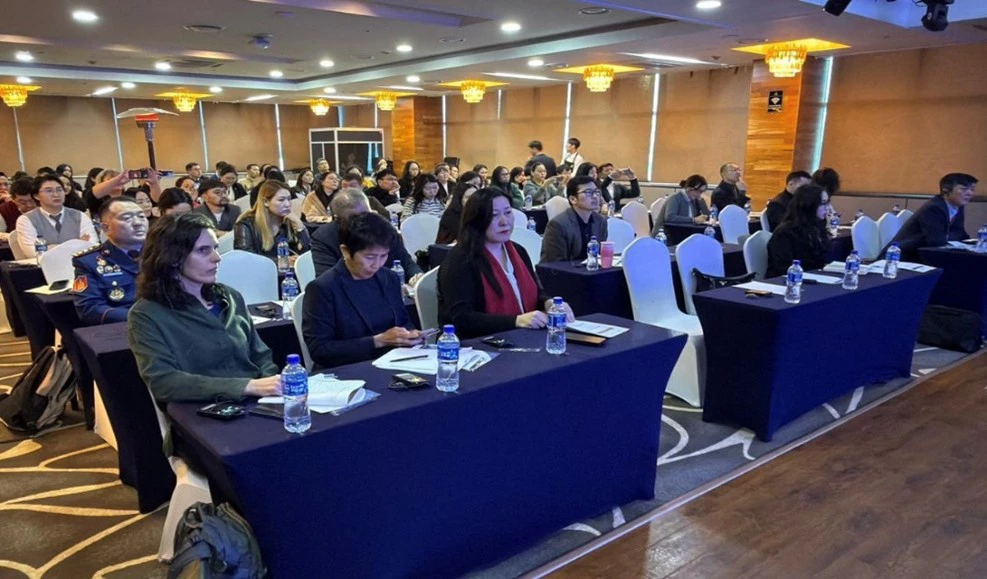 Local housing practitioners participating in a resilient construction training workshop organized by the World Bank in Ulaanbaatar.
3. Mobilizing Private Capital for Affordable Housing
No government program alone will retrofit hundreds of thousands of homes. Mobilizing private capital is essential, and momentum is already building. IFC’s investment in Mongolia’s first social bond with Khan Bank identifies affordable housing as an eligible investment area, opening opportunity for private finance to flow into urban housing improvement at scale.
This is the third pillar in action: designing instruments that attract private investors into sectors where social and economic returns are clear but the market has not yet moved on its own, reducing pressure on public budgets while accelerating impact.
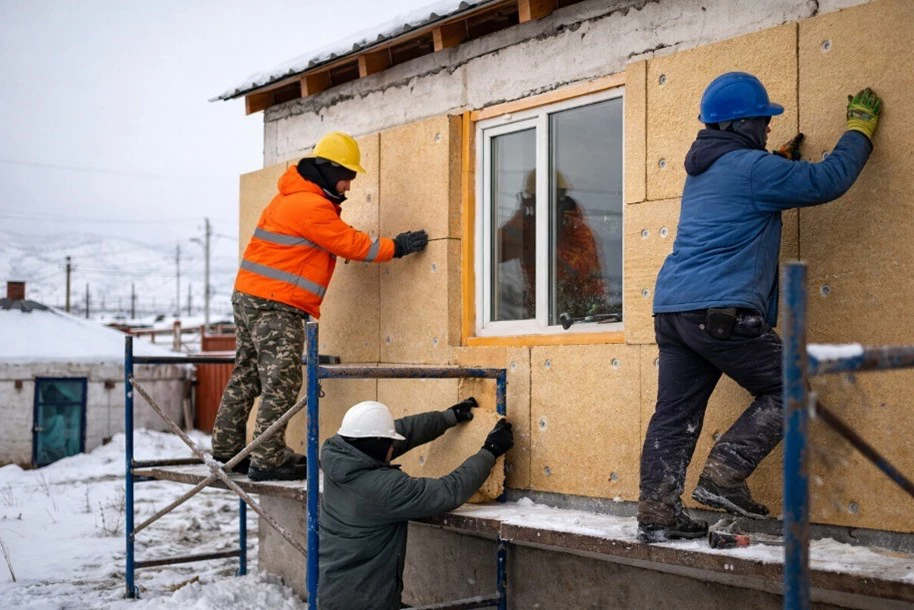 An illustrative image of workers installing insulation as part of a resilient housing upgrade.
From Pilots to Scale
Resilient housing does not require replacing entire neighborhoods. Practical, affordable solutions like improved foundations, structural reinforcements, safe insulation, and airtightness measures already exist and are suited to self-built homes. The challenge is moving from isolated upgrades to coordinated programs that integrate clear standards, builder training, quality certification, and targeted financing.
Mongolia’s urbanization trajectory makes this urgent. As more Mongolians move into cities, housing conditions in informal districts will increasingly determine whether those cities generate productive employment or absorb workers into cycles of poor health and low productivity.
For residents like Bat-Erdene, progress will mean warmer homes, cleaner air, and the ability to show up to work healthy and consistently. For Mongolia’s cities, it will mean a construction sector that employs more people in better jobs, a workforce that is more productive, and urban economies capable of sustained growth.
That is what the World Bank Group’s Jobs Agenda looks like on the ground — and why more resilient housing is an integral part of it.
The authors would like to thank Build Change for their technical inputs and collaboration on the resilient construction training workshop.
Note:- For Check Orignal Blog Click Here