With 1.2 billion young people set to reach working age in the next decade, delivering more and better jobs is at the heart of the World Bank Group’s development agenda. Infrastructure is one of several sectors with high potential to create local jobs. From railways and roads to electricity and digital access, investments in physical and human capital represent a fundamental pathway toward empowering women, engaging young people, strengthening communities and creating business opportunities.
Within that, transport is a core pillar, accounting for up to 12 percent of Gross Domestic Product (GDP) in many low-and-middle income countries.
Today, however, transport remains one of the most male-dominated fields globally – with women representing just 12 percent of the workforce. A sector that excludes women leaves talent, productivity, and growth on the table.
How to overcome these challenges? Three pillars are crucial to creating jobs: clear policies and regulations, mobilizing private capital, and investing in infrastructure – both physical and human. This last element, investing in human capital through education programs and skilling, is important for building a pipeline for women preparing for careers in the transport sector.
Surprisingly, one of the most effective tools for addressing this challenge may also be one of the most overlooked: targeted internships. Türkiye’s experience with a World Bank Group-supported rail modernization initiative showcases how this underutilized tool can serve as a pathway to jobs and growth for women around the world. Between 2020 and 2025, 250 women students in their final year of study in science, technology, engineering, and mathematics (STEM) worked as interns under the World Bank-financed Rail Logistics Improvement Project (RLIP), with support from the General Directorate of Infrastructure Investments (AYGM) at Türkiye’s Ministry of Transport and Infrastructure (MoTI).
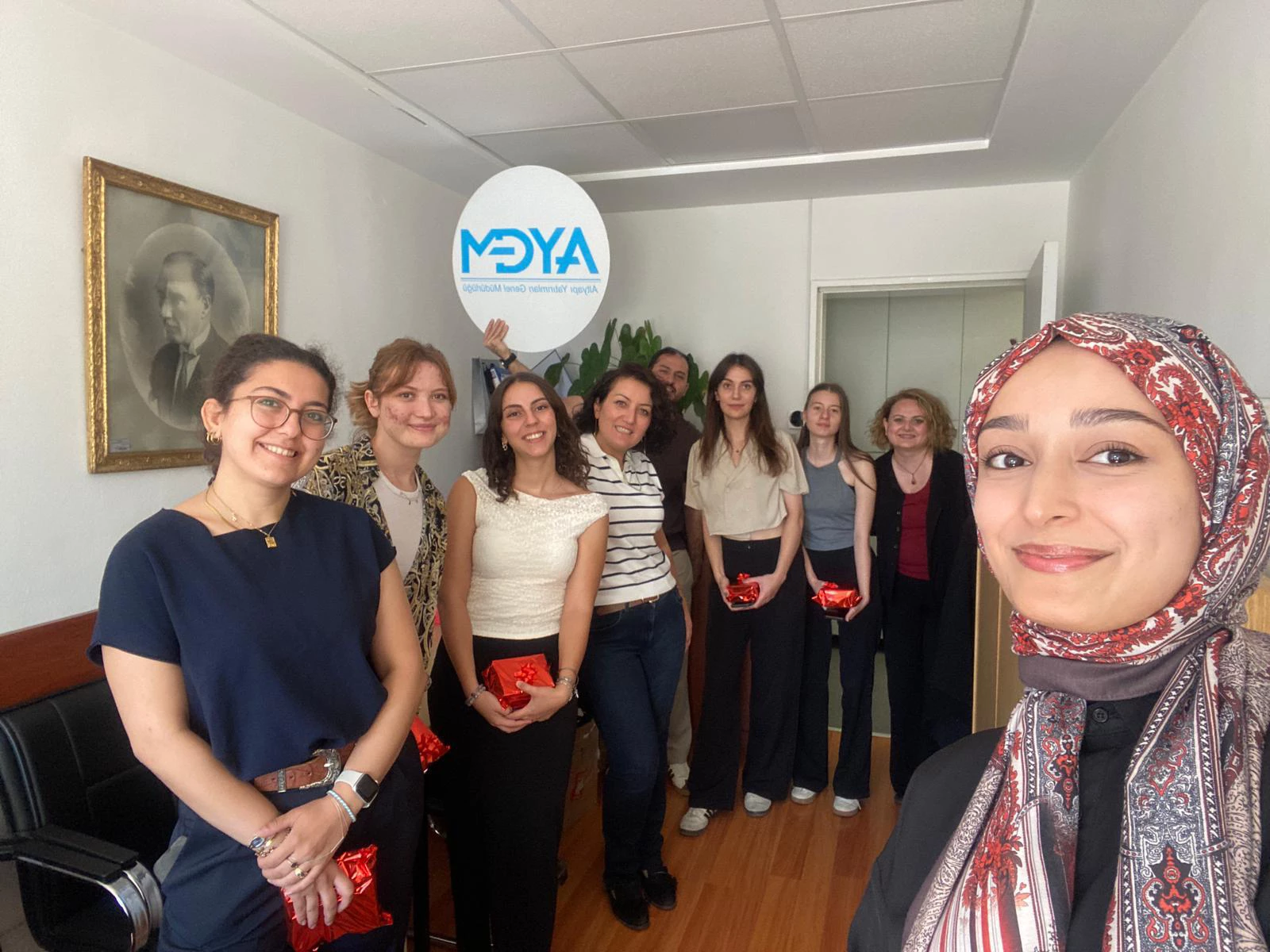
The results tell a story of success. Follow-up interviews with 2022 and 2023 graduates show employment rates of 80 percent and 50 percent respectively, with many in roles directly related to their internship experience. Virtually all were in their first professional position – suggesting the internship launched, rather than merely complemented, their careers.
Furthermore, a 12-fold expansion of participants from the original target of 20 to 250 demonstrates that well-designed career-entry programs can generate far more interest than planners anticipate – even in industries where women have long been absent.
Why the transport sector has a pipeline problem
Men account for 89 percent of employees in Türkiye’s transportation and storage sector – a striking imbalance given that women represent 37 percent of graduates in engineering, manufacturing, and construction, and that school enrollment is near gender parity. The talent pipeline exists; what has been missing are the pathways in.
Young women pursuing STEM degrees frequently graduate without practical experience in their chosen fields. Without early exposure, infrastructure firms and transport operators feel abstract or inaccessible. Internships help break this cycle by creating visibility for participants and for host institutions alike and by making a sector that has long felt closed feel attainable – overcoming a major hurdle to employment.
What the Ministry of Transport and Infrastructure (MoTI) got right
Interns were placed in project units aligned with their academic backgrounds – civil engineering, architecture, urban planning, environmental sciences, international logistics – and given work with a direct bearing on ongoing projects. Structured supervision, mentorship, and formal performance evaluations were embedded throughout, with feedback shared with universities so that internship experience became part of one’s academic record.
Accessibility was also taken seriously. Starting in 2023, the AYGM adopted Türkiye’s national Career Gate digital platform to centralize applications, diversify the pool beyond Ankara, and ensure transparent, merit-based selection. Financial support reduced barriers for students who could not afford unpaid work: interns received a stipend, subsidized meals and accident and occupational health insurance. Timing was equally deliberate: targeting exclusively final-year students meant participants entered the workforce with fresh, relevant experience at exactly the moment it mattered most.
A model the sector can and should follow
MoTI’s commitment to this program sends a signal that extends far beyond the 250 individual women who participated. When a national ministry of this standing embeds gender inclusion as a core project objective, it sets a benchmark that the broader transport and logistics sector – both public and private – can observe and replicate. And the scale is already growing. Under the World Bank-financed Eastern Türkiye Middle Corridor Railway Development Project (ETMIC) the program is being enhanced to include up to 18 months of post-internship job placement support. The newly approved Istanbul North Rail Crossing Project will onboard an additional 100 female interns and provide equivalent, post-internship support.
The hope is that this program’s reach will extend beyond World Bank Group-financed projects. Transport operators, logistics companies, engineering firms, and infrastructure agencies across Türkiye and the wider region could adapt this model with relative ease. Replication does not require new legislation or large budgets, only institutional commitment, thoughtful design, and a willingness to track the jobs and careers it creates.
Behind the statistics of this program are 250 individual women who gained hands-on experience at a public institution of national importance, built professional networks, and left school better positioned to compete for careers in transport. A new door was opened. That is how change in male-dominated sectors begins and how the World Bank Group’s jobs agenda drives change for women.
Contributors to the story: Murad Gurmeric, Rima Aloulou, Daniel Pulido, and Benjamin Gerald Holzman
Note:- This Blog is find from Here